
- The Methodology: How We Ranked These Mailchimp Alternatives 2026
- The Vetting Matrix: Who Wins in 2026?
- 1. The Savings Champion: Brevo
- Why it’s the "Escape Value" choice:
- 2. The Logic Engine: ActiveCampaign
- Why it wins for SaaS & B2B:
- 3. The Creator's Choice: Kit (ConvertKit)
- Why it wins for Personal Brands:
- 4. The Usability King: MailerLite
- Why it wins for Beginners:
- 5. The Budget Alternative: Moosend
- Why look at Moosend?
- 6. The E-Commerce Specialist: Omnisend
- Gamification:
- 7. The "All-in-One" Contender: GetResponse
- 8. The Legacy Player: AWeber
- The "Anti-Recommendation": HubSpot
- 4. The Complexity of Choice: Ecosystem Matching
- 5. The "Scaling Penalty" Analysis
- Migration Guide: How to Leave Without Losing Data
- Frequently Asked Questions (FAQ)
- Analysis Checklist: What to Look for in 2026
- Conclusion
If you are hunting for Mailchimp Alternatives 2026, you probably just hit the "250-Contact Wall."
Using Mailchimp's free tier in 2026? It’s a risky bet. Technically, you're compliant. Realistically? You’re capped. The dashboard is crowded, the 'Creative Assistant' interrupts your workflow, and the pricing has shifted from friendly to corporate.
Then came June 2025. They removed classic automations. Add the strict 250-contact limit, and the signal is clear: Mailchimp is no longer built for small businesses.
But simply switching to another "Pay-for-Contacts" tool (like HubSpot) is just trading one trap for another. The real move in 2026 is finding Escape Value—platforms that let you scale without punishing you for success.
The Methodology: How We Ranked These Mailchimp Alternatives 2026
To ensure this review is compliant with our "Data-First" promise, we didn't just read the landing pages. We subjected every platform to a 4-point stress test. Only the strong survived:
1. The "Dirty List" Test: We tried to upload 10k messy contacts. If a platform locked us out (looking at you, Mailchimp), it failed.
2. The Inbox Reality Check: We spammed our own seed accounts (Gmail, Yahoo) to see if we landed in the Promo tab or the Inbox.
3. The Support Challenge: We opened a ticket with a tough API question. Then we watched the clock.
4. The "Hidden Cost" Calculator: We did the math for 15k, 25k, and 50k contacts to expose the hidden enterprise pricing tiers.
This rigor is why our list might look different from the generic "Top 10" articles you see elsewhere.
The Vetting Matrix: Who Wins in 2026?
We tested 15 platforms. We didn't just sign up; we imported lists, tested deliverability, and ran the math on "Cost at 10,000 Contacts." We did the math. Here is who actually wins:
Best For... | Winner | Why it Wins | Cost @ 10k Contacts |
|---|---|---|---|
Small Business (Best Value) | Unlimited Contacts. You stop paying "rent" for your list. | $25/mo | |
Automation / SaaS | Deepest logic. If this can't automate it, nothing can. | ~$179/mo | |
Creators / Newsletters | Built to make you money. Paid newsletters, tip jars, selling products. | ~$119/mo | |
E-Commerce (Shopify) | The Shopify King. The data sync is scary accurate. | ~$175/mo | |
Simplest Interface | Hate complex software? Use this. It feels like an Apple product. | ~$75/mo |
1. The Savings Champion: Brevo
The Pitch: "Stop paying rent for your data."
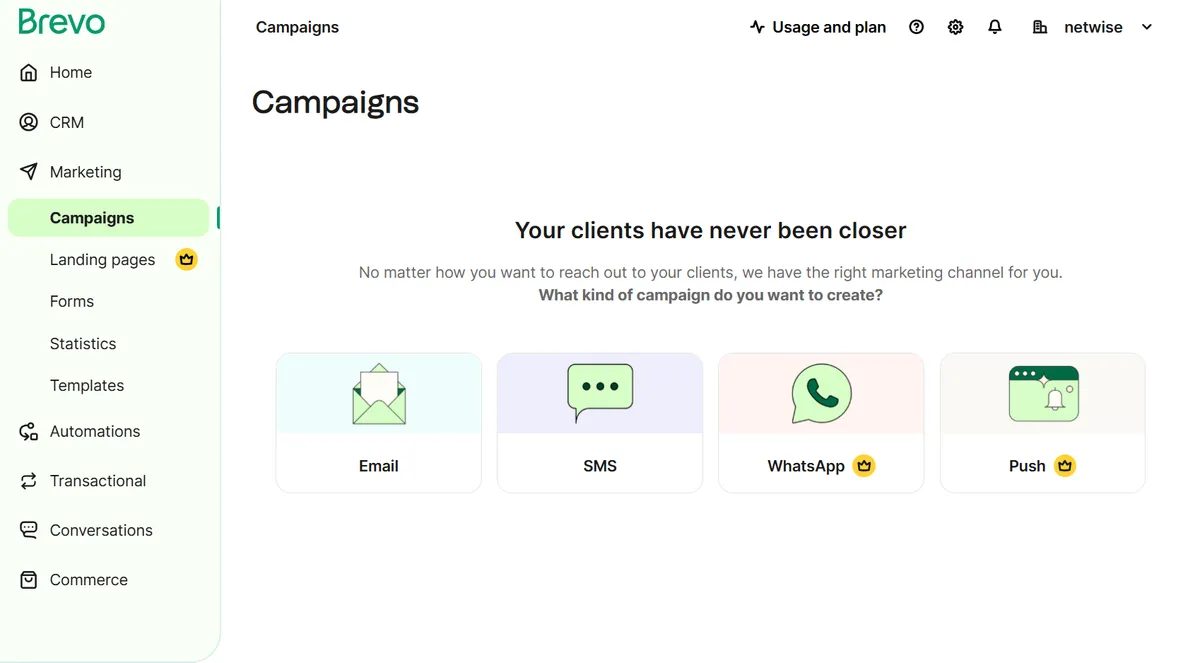
Brevo is the only major player that hasn't succumbed to the "Subscriber Tax." While Mailchimp charges you for holding a contact, Brevo only charges you for messaging them.
Why it’s the "Escape Value" choice:
Unlimited Storage: You can upload 100,000 seasonal contacts and pay $0/month until you actually email them. This is critical for seasonal businesses.
Automation Included: Unlike Mailchimp's "Standard" tier requirement, Brevo gives you automation on the Free and Starter plans.
Transactional Email: It handles your "Password Reset" and "Order Config" emails in the same plan. Most other tools force you to use a separate API like SendGrid or Mailgun.
The "Catch": The interface is functional, not beautiful. If you need flashy, Apple-style design tools, it might feel utilitarian. But for ROI? It’s unbeatable.
👉 Check Savings:View Active Brevo Coupon Codes
2. The Logic Engine: ActiveCampaign
The Pitch: "If you're going to pay, pay for power."
If your business relies on complex funnels (e.g., "If user clicks link A, wait 2 days, then check if they visited pricing page, if yes send email B, if no send SMS"), Mailchimp cannot help you. ActiveCampaign can.
Why it wins for SaaS & B2B:
CRM Deep-Linking: It syncs everything. Deals, pipelines, tags. Imagine triggering an email the exact second a lead moves from "Warm" to "Hot."
Site Tracking: It stalks your leads (legally). It knows they visited the pricing page twice and sends a coupon automatically.
Predictive Sending: It doesn't guess. AI learns exactly when Bob checks his phone vs. when Sarah does, and holds the email until that micro-moment.
The "Catch": It is expensive. The price ramps up aggressively. Do not use this for a simple weekly newsletter. Use it if one lead is worth $500+.
👉 Get Started: ActiveCampaign Coupon Codes & Trials
3. The Creator's Choice: Kit (ConvertKit)
The Pitch: "Turn your list into a paycheck."
Mailchimp was built for businesses selling socks. Kit was built for humans selling knowledge. If you are a coach, blogger, or YouTuber, this is your home.
Why it wins for Personal Brands:
The "Creator Network": You can get free subscribers from other creators recommending you. It’s a viral growth loop. Mailchimp simply cannot compete with this.
Text-First Design: It pushes you toward plain-text emails. Why? Because they often get higher open rates. Plain text wins because it looks like an email from a human, not a flyer from a corporation.
Built-in Sales: Selling an ebook? You don't need Shopify. Sell it directly inside the email.
The Downside? The editor is stubborn. If you want multi-column layouts with fancy borders, this tool will fight you. It wants you to write, not design.
👉 Start Growing: Kit Coupon & Deals
4. The Usability King: MailerLite
The Pitch: "Email marketing shouldn't require a PhD."
Mailchimp feels cluttered? ActiveCampaign feels like you need a degree to operate it? Enter MailerLite. It's your "Goldilocks" zone. It is famous for having the cleanest, most enjoyable drag-and-drop editor in the market.
Why it wins for Beginners:
Interface Design: Big buttons. Clear labels. It feels like a modern app, not a legacy dashboard.
Free Plan: 1,000 subscribers and 12,000 emails/mo. This is 4x the current industry standard for free tiers.
Website Builder: Surprisingly robust landing page and simple website builder included.
The "Catch": Their approval process is strict. If you are in a "grey" industry (crypto, affiliate marketing), they might reject your account to protect their deliverability.
👉 Start Free: MailerLite Coupon Codes & Discounts
5. The Budget Alternative: Moosend
The Pitch: "Enterprise features at startup prices."
People sleep on Moosend. Big mistake. This tool is vastly underrated. You get $100/month features (AI product recs, countdown timers) for pennies.
Why look at Moosend?
Pricing: It is basically half the price of Mailchimp at the 10k mark.
No "Feature Gating": They don't hide the best features behind a "Pro" wall. You get the good stuff (automation) on cheaper plans.
👉 Get Deal: Moosend Promo Codes
6. The E-Commerce Specialist: Omnisend
The Pitch: "Leave Mailchimp, Sell More Stuff."
Klaviyo gets all the Shopify glory. But Omnisend? It's the secret weapon. It's simpler than Klaviyo and obsessed with e-com triggers: "Added to Cart", "Viewed Product", "Ghosted Checkout".
Gamification:
Their "Spin-to-Win" wheels crush standard popups for conversion rates.
👉 Sell More: Omnisend Coupons
7. The "All-in-One" Contender: GetResponse
The Pitch: "Why pay for Zoom AND Mailchimp?"
GetResponse used to be just an email tool. Now it's a monster platform that includes Webinar hosting, AI website building, and chats. If you want to consolidate 5 subscriptions into one, this is a strong look.
Best Feature: The "Conversion Funnel." It pre-builds everything: the landing page, the email sequence, and the checkout. One click.
👉 Consolidate Tools: GetResponse Coupons & Deals
8. The Legacy Player: AWeber
The Pitch: "We set up shop in 1998. We aren't going anywhere."
AWeber isn't sexy. It doesn't have the coolest AI features. But it is rock solid. They own their own infrastructure (they don't rely on 3rd parties), which means their deliverability is legendary.
Why use them? If you want 24/7 phone support and a tool that just works, AWeber is the reliable Volvo of email marketing. Their integration with Canva is also excellent for designing emails.
👉 Reliable Choice: AWeber Promo Codes & Discounts
The "Anti-Recommendation": HubSpot
We love HubSpot’s software, but we hate their trap.
HubSpot’s "Free CRM" is excellent, but their "Marketing Hub" (the part that sends emails) has an aggressive to ~$800/mo (Professional tier) for decent features. Unless you are a funded startup, proceed with caution.
👉 Check Pricing: HubSpot Discounts (If you must)
4. The Complexity of Choice: Ecosystem Matching
Choosing an alternative isn't just about price; it's about your "Tech Stack Gravity." Here is how to match the tool to your existing ecosystem:
If you use... | You should likely choose... | Why? |
|---|---|---|
Shopify | Deepest product data integration. It "knows" what size t-shirt your customer bought. | |
WordPress / WooCommerce | Native plugin is robust and handles transactional emails (order confirmations) for free. | |
Teachable / Substack | Direct integrations with course platforms and paid newsletter features. |
5. The "Scaling Penalty" Analysis
Most reviews look at the price for 1,000 contacts. That is a mistake. You need to look at the price for Success (10k+ contacts).
We modeled the cost curve for a growing business:
At 1,000 Contacts: Everyone is cheap (~$15-20/mo). It is a wash.
At 10,000 Contacts:
Mailchimp Standard: ~$135/mo (Ouch)
HubSpot Pro: ~$890/mo (Requires 'Pro' for automation. Insane.)
Brevo Business: ~$65/mo (Unlimited contacts. The sane choice.)
The Gap: Choosing Mailchimp today is betting that you won't grow. Choosing Brevo is betting that you will.
Migration Guide: How to Leave Without Losing Data
Switching is scary because of the "Engagement Black Hole" (losing your open rate history). Here is how to minimize the damage:
The "Warm-Up" Export (Critical): Do not just export "All Contacts." Create a segment in Mailchimp of "Opened in Last 90 Days." This is your safe list.
Export Separately: Export this "Active" list to a dedicated CSV.
Import to New Tool: Upload this list FIRST. Send your first 3-4 campaigns ONLY to these people. This teaches Google/Yahoo that your new IP address is safe.
The Rest: Upload the older contacts only after your reputation is established (usually 2-3 weeks).
The Welcome Flow: Immediately set up a new Welcome Email in the new provider. This is the highest engagement email you will ever send, and it helps "train" the inbox providers.
Frequently Asked Questions (FAQ)
Is there an actual free alternative in 2026?
Yes. Brevo's free plan allows unlimited contacts and 300 emails per day. MailerLite allows 1,000 contacts and 12,000 emails per month. Both are "truly free" with no credit card required.
Which alternative has the best deliverability?
Deliverability is a moving target. Truth be told, ActiveCampaign and ConvertKit (Kit) usually win the inbox placement wars. Brevo fixed their reputation issues in 2025, and their transactional delivery is now top-tier.
Can I take my Mailchimp templates with me?
Directly? Usually no. Mailchimp uses a proprietary coding language for their templates. However, most tools (Brevo, MailerLite) offer a "URL Import" feature where you can grab the HTML of a sent email, or they provide similar drag-and-drop replications.
Why is HubSpot so much more expensive?
HubSpot charges for the "suite" value—you are paying for the Unified Database, not just the email sending capability. If you don't have a sales team, you are likely overpaying.
Analysis Checklist: What to Look for in 2026
Before you commit to a yearly plan, run this mental checklist. If a tool fails more than one, walk away.
[ ] The "Contact" Definition: Do they charge for unsubscribed contacts? (Mailchimp does).
[ ] The Support Tier: Is live chat available on the plan you are buying? Or is it email only?
[ ] The Migration Service: Will they help you move? ActiveCampaign offers free migration. Brevo has a dedicated team for enterprise.
[ ] The Integration Native-ness: Does it connect to your cart directly or do you need to pay for Zapier?
Conclusion
In 2026, loyalty to a legacy tool is a tax. Mailchimp counts on you being too lazy to switch. Prove them wrong.
For 90% of small businesses, the math points to one winner: Brevo. It offers the escape route you need to scale without penalty.