Gupshup Coupon & Promo Codes

Top Gupshup Coupon Codes for October 2026

30%
OFF

Get 30% off select items at Gupshup when you apply this exclusive discount code during checkout.

Get Code
Did it work?
10%
OFF

Save 10% on select items at Gupshup when you apply this exclusive discount code during checkout.

Get Code
Did it work?

Get Gupshup coupons in your inbox

We'll notify you when new verified codes are added.

About Gupshup & Latest Deals

Service Highlights

Best For
General Use
Support
Global Support
Guarantee
Money Back
Feature
Multi-Channel Failover

Coupon Insights

Best Discount
UP TO 30%
Avg. Savings
20%
Active Offers
2
Verified
0

Business messaging and customer conversation tools for marketing, commerce and support.

Savings opportunities available through Gupshup coupon codes

Gupshup offers business messaging with savings tied to message usage and conversation entry points. WhatsApp API Self Serve carries a standard $0.001 Gupshup fee per message, with WhatsApp fees charged separately at actuals. Utility and Authentication messages can qualify for lower volume-tier rates. Eligible Click to WhatsApp conversations receive a WhatsApp fee exemption for their first 7 days. The first 1,000 Service messages also carry a WhatsApp fee allowance. These savings affect particular billing components, so a reduced WhatsApp charge still sits alongside the applicable Gupshup messaging fee.

Eligible products and services

Service categories frequently on promotion

Message category and destination determine the starting rate for Gupshup messaging discounts. The WhatsApp API Self Serve calculator separates Marketing, Utility, Authentication and Authentication (International), alongside Service messages and voice calls. Utility and Authentication have volume tiers that can lower the relevant base charge as eligible usage grows. The applicable discount structure adjusts the standard base rate through its qualifying slabs. Country selection also matters: recipient region codes take priority, followed by country codes and then the default rate. Enterprise features and pricing have a separate enquiry route from the self-serve message calculator.

Services usually excluded from promo codes

WhatsApp fees and Gupshup fees are separate billing components, so a message discount needs to match the charge it reduces. The WhatsApp API Self Serve rate table lists outgoing template text and incoming and outgoing session text under the Gupshup Fee heading. Voice usage has its own charge: Gupshup lists $0.0001 per second for user and business initiated calls. That separately priced voice line belongs in a calling budget alongside messaging charges. Recharge refunds also deduct applicable taxes and charges, making those deductions relevant when comparing a funded balance with the amount returned.

Factors influencing the final discount value

Impact of billing cycle on promotional price

Gupshup's ISV partner pricing uses a per-message fee without subscription fees or a volume commitment. This arrangement links expenditure to messaging activity rather than an annual subscription purchase. Subscription services have their own terms: fees remain payable for the full subscription term even after early cancellation. Plan features, limits and charges can vary with usage and can change without notice. For invoiced services, the Master Services Agreement governs payment terms when executed; otherwise the Sales Order or Addendum applies. Undisputed invoice amounts have a stated 30-day payment period, with overdue amounts subject to interest.

Promo codes vs. automatically applied offers

Gupshup's volume savings depend on qualifying usage and the applicable rate slabs. Utility and Authentication volume tiers unlock more attractive rates as message volumes increase. Eligible utility templates sent in response to a customer within an open customer service window have a WhatsApp fee exemption. Click to WhatsApp entry-point conversations have a separate introductory exemption lasting 7 days. These mechanisms attach to message eligibility rather than a retail subscription term. The Gupshup charge added to the WhatsApp rate is an absolute amount unless specified as a percentage, which keeps the service charge distinct from the channel's discount calculation.

Accessing active codes for Gupshup

The Gupshup pricing calculator helps you match the offers on this page to the relevant messaging charges. Its Country selector sits above the rate table, whose headings are Component and Price in USD. The table groups WhatsApp Fee and Gupshup Fee separately, with individual rows for message categories and calls. Selecting the recipient country sets the destination context before comparing those rows. The enterprise pricing link below the table opens the WhatsApp Business API route, while Get Started opens an ISV partner enquiry. That enquiry asks for Name, Business Email, Phone Number and Business. Scroll up for the current Gupshup offers.

How to use Gupshup Discount Codes?

  1. 1
    Choose a couponGrab the Gupshup offer that works best for you. It's listed above.
  2. 2
    Reveal the codeHit "Get Code" or "Get Deal" depending on the offer type. Popup opens. Click the copy icon inside—code goes to your clipboard.
  3. 3
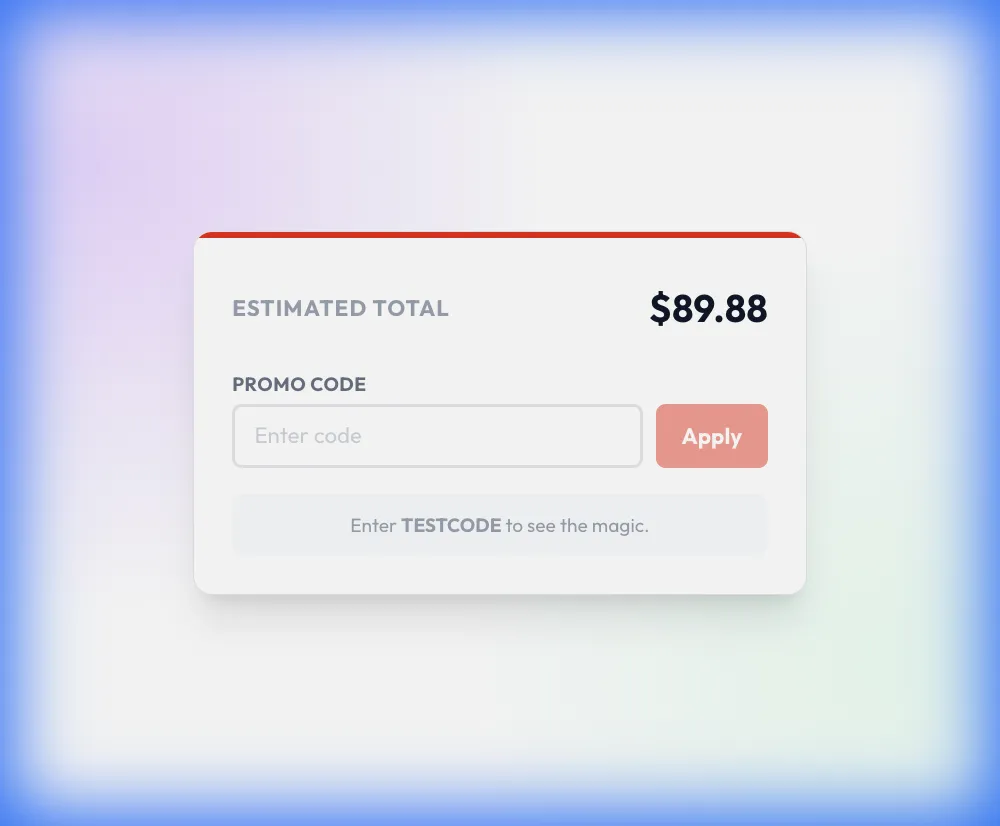
    Apply at checkoutNow head over to Gupshup's site. Pick your WhatsApp Business API plan. Checkout page has a "Promo Code" field. Paste what you copied there.
Simulator showing where to paste the promo code at checkout

Customer Reviews

5.0
Based on 0 verified ratings

Login to Rate & Review

Join our community to verify coupons, earn coins, and help others save.

Sign In / Register


Gupshup Discount FAQs

Gupshup volume discounts depend on eligible messaging volume and the applicable rate slabs. Utility and Authentication have tiered rates designed to reward higher usage. The reduction is calculated from the standard base rate and adjusted through the qualifying slabs, so the relevant message category determines which rate structure applies. WhatsApp charges remain distinct from the Gupshup charge added to them, which is an absolute amount unless a percentage is specified. Recipient location also affects the underlying WhatsApp rate, with region codes taking precedence over country codes. The resulting saving therefore belongs to the qualifying category and destination rather than every charge associated with the account.
Gupshup utility templates sent in response to a customer within an open customer service window qualify for a WhatsApp fee exemption. The customer's message and the open window are the conditions that make this route relevant. Utility also belongs to the message categories with volume tiers, creating a separate basis for eligible savings as usage increases. The self-serve pricing table presents Utility under WhatsApp Fee, apart from the Gupshup message charge. Gupshup applies its fee to messages, including template text, so the channel exemption and the platform fee remain separate parts of billing. Sending the qualifying reply while the customer service window remains open preserves that exemption.
A Gupshup messaging discount reduces its eligible billing component, with platform messaging fees and channel charges accounted for separately. WhatsApp message fees are passed through at actuals, alongside the Gupshup fee for messaging. Outgoing template text and incoming and outgoing session text appear in the Gupshup Fee section, which applies across messages. Calling has a distinct billing line for user and business initiated voice usage, separate from those text categories. The country calculator also differentiates Marketing, Utility, Authentication and international authentication charges. A reduction associated with a qualifying message category therefore needs to be considered alongside the remaining platform and channel components of the service being used.
Gupshup's Click to WhatsApp saving is tied to an eligible free entry-point conversation. Conversations starting from Click to WhatsApp ads receive the WhatsApp fee exemption for their first 7 days. That entry route determines the benefit, rather than the customer's choice of an annual or monthly subscription. The pricing calculator places this allowance within its WhatsApp Fee section, separate from the Gupshup Fee section for messages. Gupshup's message fee remains applicable, including the rows covering outgoing template text and incoming and outgoing session text. The introductory allowance therefore reduces the channel portion for qualifying conversations during its stated period, with the platform component accounted for separately.
Gupshup's ISV partner offer has no subscription fees or volume commitment. Its advertised structure is a fixed Gupshup per-message fee, with WhatsApp fees added at actuals. The detailed pricing route separates the platform's messaging charge from channel charges across the different message categories. Get Started opens the partner enquiry form, which collects a name, business email, phone number and business details. The partner programme also includes global assistance across geographical regions. For enterprises registering through partners, the associated wallet is a prepaid balance used for Gupshup services and applicable WhatsApp fees. Normal partner wallet balances remain service credits under the partner refund policy.
An unused Gupshup WhatsApp self-serve recharge qualifies for a written refund request within 7 days of recharge. Eligibility requires non-usage of the platform from the recharge date, and the policy applies across all regions. The amount returned is reduced by applicable taxes and charges. A request made after the deadline can instead receive WhatsApp notification credits in the wallet at Gupshup's discretion. Complete and accurate information is required to process a refund or credit, and additional original-charge documentation can be requested when standard processing is insufficient. Recharge refund grievances can be directed to devsupport@gupshup.ai, the contact designated for that policy.
Gupshup deducts applicable taxes and charges from an eligible WhatsApp self-serve recharge refund. The refund entitlement concerns a recharge followed by non-usage and a written request submitted within 7 days. This policy covers all regions, so the regional scope does not remove those deductions. Gupshup requires full, accurate information to complete the return, and a payment it never received does not establish an obligation to refund. The receiving bank or financial institution determines when the funds are credited after remittance. If the original recharge was funded through the Gupshup Wallet, the approved return goes back to wallet credit, where it remains available for eligible messaging use.
Gupshup's approved self-serve recharge refund destination depends on how the recharge was funded. A wallet-funded recharge returns only to the Gupshup Wallet. For online-funded recharges, the refund can go to the wallet or a valid bank or financial institution account whose details were supplied at the time of the request. Gupshup has no obligation to redirect a refund to a different bank or financial institution from the original payment source. Once a returned amount enters the wallet, it cannot subsequently be withdrawn to another account or paid out as cash. That balance remains in the wallet for WhatsApp messaging, while financial-account credit timing depends on the receiving institution.
Gupshup Partner Portal wallet balances are non-refundable under normal circumstances. Those balances serve as credits towards eligible Gupshup services for partners and enterprises registering through them. An exceptional wallet refund requires Gupshup's discretionary approval, with the wallet owner responsible for reasonable supporting documentation and demonstrating compliance with applicable anti-money laundering rules. The partner termination conditions separately provide for unused credits to be refunded when services close or Gupshup voluntarily closes them. Billing-event investigations have a 30-day reporting window measured from submission of the relevant message. Discretionary refunds or adjustments for reported issues must fall within the applicable investigation period, making that deadline distinct from an ordinary wallet withdrawal request.
Gupshup invoice discrepancies must be reported by email within 7 business days of receiving the invoice. The billing contact for that procedure is invoice@gupshup.io, and an invoice becomes accepted after the reporting deadline. Volume-based reductions use the standard base rate adjusted through applicable slabs, so the category and qualifying usage form the basis of a discount query. Raising a discrepancy does not postpone payment of the undisputed portion. Undisputed invoice amounts carry a 30-day payment period, with the Master Services Agreement or applicable Sales Order governing payment terms. Overdue amounts can attract interest at the applicable Prime Lending Rate even while a separate portion is disputed.