LunaNode Coupon & Promo Codes

Top LunaNode Coupon Codes for October 2026

$10

Sign up for an account with LunaNode and receive $10 free credit, unused credit expires after 60 days.

Get Code
Did it work?
$20

Save $20 at LunaNode by signing up with this coupon code for KVM Cloud Servers in Toronto, no charge to card.

Get Code
Did it work?

Get LunaNode coupons in your inbox

We'll notify you when new verified codes are added.

About LunaNode & Latest Deals

Service Highlights

Best For
General Use
Support
E-mail, Ticket, Call
Guarantee
Hourly Billing
Feature
Bandwidth Pooling

Coupon Insights

Best Discount
See Offers
Avg. Savings
N/A
Active Offers
2
Verified
0

Prepaid KVM cloud servers with hourly billing, snapshots and block storage.

Savings opportunities available through LunaNode coupon codes

LunaNode sells KVM cloud servers, and the offers on this page help you plan lower hosting costs. Hourly billing charges for the time a VM exists, so short projects can cost less than keeping a server for a full month. Shelving also reduces the charge while retaining storage and assigned IP addresses. DNS includes one million free queries per month when other services use at least $3 credit in that calendar month. Boot volumes provide another saving: a storage discount corresponding to the disk space included with the VM plan.

Eligible products and services

Service categories frequently on promotion

LunaNode offers General-Purpose, Memory-Optimized and Compute-Optimized virtual machines. Each family has its own CPU, memory, disk and bandwidth allocation, which determines the plan selected for an offer. The m.1s plan is listed at $3.5 per month and $0.00486 per hour. The purchase flow uses Create VM, followed by a hostname, Plan and Image selection, then Create Virtual Machine. Hosted email has a separate allowance: the first 5,000 emails each month and first 1 GB of storage are free when other services consume at least $3 credit during the same calendar month.

Services usually excluded from promo codes

Separate resource charges matter when budgeting a LunaNode offer. HDD block storage costs $0.03 per GB per month, while SSD block storage costs $0.06 per GB per month. Additional floating IP addresses are separately priced at $1 per month each. Snapshot storage is another charge, with its own free allowance and hourly accounting. Email storage and outgoing messages also have distinct usage rates. Promotional account credit cannot be refunded. The amount of promotional credit added since account creation is deducted when calculating a refund of unused credit, so the refundable balance differs from the displayed balance.

Factors influencing the final discount value

Impact of billing cycle on promotional price

LunaNode charges hourly from prepaid credit, so active time determines the VM's usage cost. Monthly plan figures sit alongside the hourly rate. Shelving changes the bill to retained storage and assigned IP addresses instead of the active VM plan. Storage then costs $0.03 per GB per month and IP addresses cost $1 per month, with both fees accounted hourly. Unshelve reactivates the VM when it is needed. Resource allowances follow their own periods: hosted email and DNS tie their included usage to the calendar month's spending on other services and the included usage allowance.

Promo codes vs. automatically applied offers

LunaNode promotional credit and resource allowances affect the bill in different ways. A coupon or promotion can add promotional account credit, which is excluded from cash refunds. A boot-volume storage discount instead corresponds to the storage included in the selected VM plan. DNS and hosted email have spending conditions for their free allowances, tied to credit used on other services during the calendar month. The first floating IP attached to each non-shelved VM is free. Unattached addresses and additional attached addresses retain their own charges, even while an account has promotional credit.

Accessing active codes for LunaNode

LunaNode uses prepaid account credit for hosting. Its Sign Up form takes an email address, password, country and province selection. Questions about the offers on this page can go to sales@lunanode.com, while existing customers can open a ticket from the control panel. Calls are accepted during business hours. To provision a server, Create VM opens the hostname, Plan and Image choices. A template supplies a usable VM; an ISO requires manual installation. Create Virtual Machine submits those selections, and the new VM appears on the dashboard with BUILD status while it is being created. Scroll up for the current LunaNode offers.

How to use LunaNode Discount Codes?

  1. 1
    Choose a couponGrab the LunaNode offer that works best for you. It's listed above.
  2. 2
    Reveal the codeHit "Get Code" or "Get Deal" depending on the offer type. Popup opens. Click the copy icon inside—code goes to your clipboard.
  3. 3
    Apply at checkoutNow head over to LunaNode's site. Pick your Virtual Machines plan. Checkout page has a "Promo Code" field. Paste what you copied there.
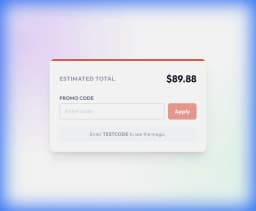
Simulator showing where to paste the promo code at checkout

Customer Reviews

5.0
Based on 0 verified ratings

Login to Rate & Review

Join our community to verify coupons, earn coins, and help others save.

Sign In / Register


LunaNode Discount FAQs

LunaNode charges virtual machines hourly from prepaid credit, so usage can last fewer hours than a full month. You can destroy a virtual machine when the workload is finished and pay for the hours it was used. The service supports changing the number of instances as requirements change. Plan selection starts from Create VM, where a hostname, Plan and Image identify the server being created. A template gives you a usable VM, while an ISO requires manual installation. Create Virtual Machine completes the provisioning selection. Separate block storage volumes can retain their data after a VM is deleted. Retaining that volume preserves a separately billed storage resource.
Unused LunaNode account credit may be refunded, but promotional credit is deducted from the refund amount. Credit added through a coupon or promotion is treated differently from money deposited into the account. The deduction includes promotional credit added since the account was created. This makes an unused promotional balance unsuitable for a cash refund. Deposited funds support a prepaid service, with virtual machines charged for their hours of use. Billing questions can be sent to sales@lunanode.com, and existing customers can open a ticket through the control panel. A refund therefore concerns eligible unused deposited credit after the promotional deduction, rather than reimbursement of the coupon's value.
Shelve reduces LunaNode VM costs to storage and IP charges while the machine is inactive. Shut Down keeps the allocated resources and continues charging the VM plan price. Shelve powers off the VM and releases its allocated CPU and memory. The change takes time, with larger VM disks taking longer to shelve. An online m.64 VM costs $200 per month, while the shelved example costs $16 per month. The reduced charge appears on the Dashboard after selecting the VM and pressing Shelve. Pressing Unshelve reactivates the machine when it is needed again. The savings come from releasing compute resources while retaining the stored VM state.
A LunaNode volume used as a VM's boot device receives a storage discount corresponding to that plan's included disk space. The allowance is valued at $0.03 per GB per month. This connects the discount to the VM's storage allocation, rather than treating all volume capacity as included. Provisioning starts by creating a volume from a template, image or snapshot in Volumes. Next, Create VM lets you select that volume from My Volumes as the boot device. Volume capacity can be set independently of the selected VM plan. If that VM is deleted, its data remains in the volume. The retained volume can then provide the boot device for another VM.
LunaNode’s free DNS offer supports automatic failover through records linked to server monitoring checks. You create a server monitoring check, then associate it with a DNS record so the record is disabled if the check goes offline. Configuration takes place in the Advanced tab when you add or edit a record. A failover setup uses a primary server for normal traffic and a backup server if the primary fails. Record weights keep the backup unused until monitoring disables the primary record. The DNS zone also contains the nameserver records automatically added during setup, while assigning those nameservers to the domain takes place through the registrar.
LunaNode’s email allowance requires at least $3 credit used on other services during the current calendar month. It includes the first 5,000 emails each month and the first 1 GB of storage free. Storage is charged at $0.2 per GB per month, rounded up to the nearest GB and billed hourly. Sending is priced at $0.1 per 1,000 emails. Messages forwarded to external accounts through aliases count as emails sent. Hosted email supports sending and receiving through webmail or IMAPS/SMTPS, with multiple user accounts and aliases. The spending condition and the message allowance therefore both affect the offer. External alias forwarding consumes the same sending allowance as outgoing messages.
LunaNode accepts credit card, Paypal and Bitcoin deposits, with Interac e-transfers also accepted for Canadian customers. Funding starts from Billing in the top-right bar, then the Summary tab. You select the amount to deposit and the payment method, press Select Payment options, and use the payment button displayed afterward. Summary also shows current-month charges and a projection of monthly spending. Payment receipts are accessible through History, where charges are aggregated daily and organized by calendar month. Monthly invoices are available through Invoices and detail the credit actually charged. Funding an account and consuming its credit are therefore recorded separately: receipts document payments, while invoices document resource charges.
LunaNode’s free IP allowance covers the first address attached to each non-shelved VM, while unattached reserved addresses are charged. Unattached floating IPs and additional attached floating IPs cost $1 per month each. A newly created VM automatically receives an internal IP and a floating IP. Selecting the VM and opening its IP tab shows those assignments. De-Associate Floating IP detaches an address while keeping it reserved on the account. Associate Floating IP attaches it to a destination VM. A reserved address therefore retains its own billing status between machines. Moving the address onto an active VM as its first attached IP brings it within the free allowance.
LunaNode lets you shut off VMs before their bandwidth allocation is exceeded through Account Policies. Bandwidth is pooled across the account's virtual machines in the same region. The monthly allocation depends on the bandwidth contributed by those machines and their active time during that month. Usage combines incoming and outgoing traffic across the VMs, so both directions affect the remaining allowance. Additional traffic beyond the pool costs $0.003 per GB, or $3 per TB. The panel dashboard displays current bandwidth allocation and usage. The automatic shutoff option changes what happens when the pool is exhausted. With that setting enabled, stopping the VMs prevents usage from continuing beyond the allocation.
LunaNode includes the first 20 GB of snapshot storage free, with further storage billed hourly at $0.03 per GB per month. Snapshots save a VM's disk state and can be taken while the VM remains online. To create one, select the VM and press Snapshot, then monitor the operation from Images. Completed snapshots can create new VMs, re-image existing machines or be downloaded from the panel. Snapshot storage has its own usage charge, separate from the VM plan. Copies replicated between regions consume storage in both regions, with a free allowance in each region. Keeping snapshot usage within the regional allowance avoids charges for storage above that allowance.